
One contractor on Reddit paid an “affordable” SEO service $800 a month for 8 months. That’s $6,400. It took his website from not showing up at all to 63rd in his area, and it brought in three calls.
Compare that with two contractors I’ve worked with. An HVAC contractor was in the map pack within the first month of rebuilding his site. A home builder went from the top 3 at 6 of 49 search points around his business to 32 of 49, between two scans three weeks apart.
SEO for contractors is the work of getting your business into Google’s map pack and local results for the jobs you want, in the towns you work. Most of the results come from a handful of moves done in the right order. Here they are, the way I’d do them for a new client.
What SEO for Contractors Is
SEO for contractors is getting your business to show up on Google, for free, when someone near you searches for the work you do. For a home service contractor, that mostly means the map pack: the three businesses that show up with the map, above the regular results.
It also means the regular results under the map, and now the AI answers Google and ChatGPT give when someone asks who to call. They all draw on the same things: your Google Business Profile, your website, your reviews and what the rest of the web says about you.
You don’t pay per click, and there’s no way to pay Google for a better local ranking. That’s the appeal. It’s also why it takes real work.
How Google Ranks Contractors
Google ranks local results on three things: relevance, distance and prominence. Relevance is how well your business matches the search. Distance is how far you are from the person searching. Prominence is how well known you are, which includes your reviews and the links pointing at you.
The people who test this for a living get more specific. Whitespark’s 2026 survey had 47 local SEO experts score 187 ranking factors. Their top five for the map pack: your primary Google Business Profile category, how close you are to the searcher, keywords in your business name, having a physical address in the city being searched, and being open when someone searches.
Why One Ranking Number Tells You Nothing
A contractor’s ranking is not one number. It changes depending on where the person searching is standing.
Here’s a real scan for an HVAC contractor I worked with, from May 2023. Each dot is a search for “HVAC contractor” from that spot, in a 3 by 3 grid a mile apart around his shop.
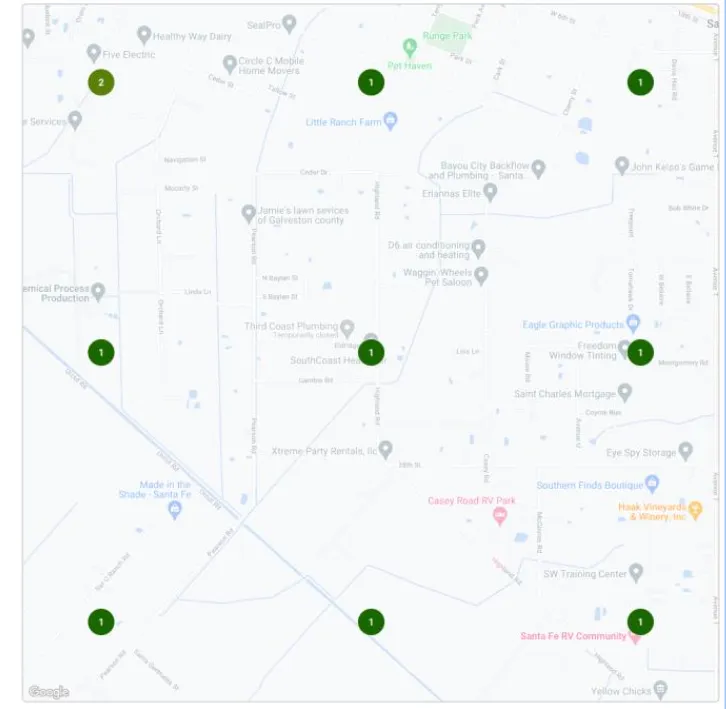
He was #1 at 8 of the 9 points and #2 at the last. Move the grid 10 miles out and the picture changes. So a single “you rank #3” in a report doesn’t tell you much. Ask where it was measured from.
The Order I’d Do It In
The right order for contractor SEO is the Google Business Profile first, then reviews, then the pages on your website, then citations, links and tracking. Before I recommend anything to a new client, I audit three things: the Google Business Profile, the whole website, and the links and citations. That shows where they stand and which fix will bring leads in fastest. The order below is the one that usually comes out of that audit.
1. Fix Your Google Business Profile
Your Google Business Profile is the free listing that runs the map pack. Start with your primary category. It’s the #1 factor in Whitespark’s survey, and it’s the most common mistake I see when I open a contractor’s profile.
A home builder I worked with had their primary category set to “Contractor.” I changed it to “Custom home builder” and finished the rest of the profile.
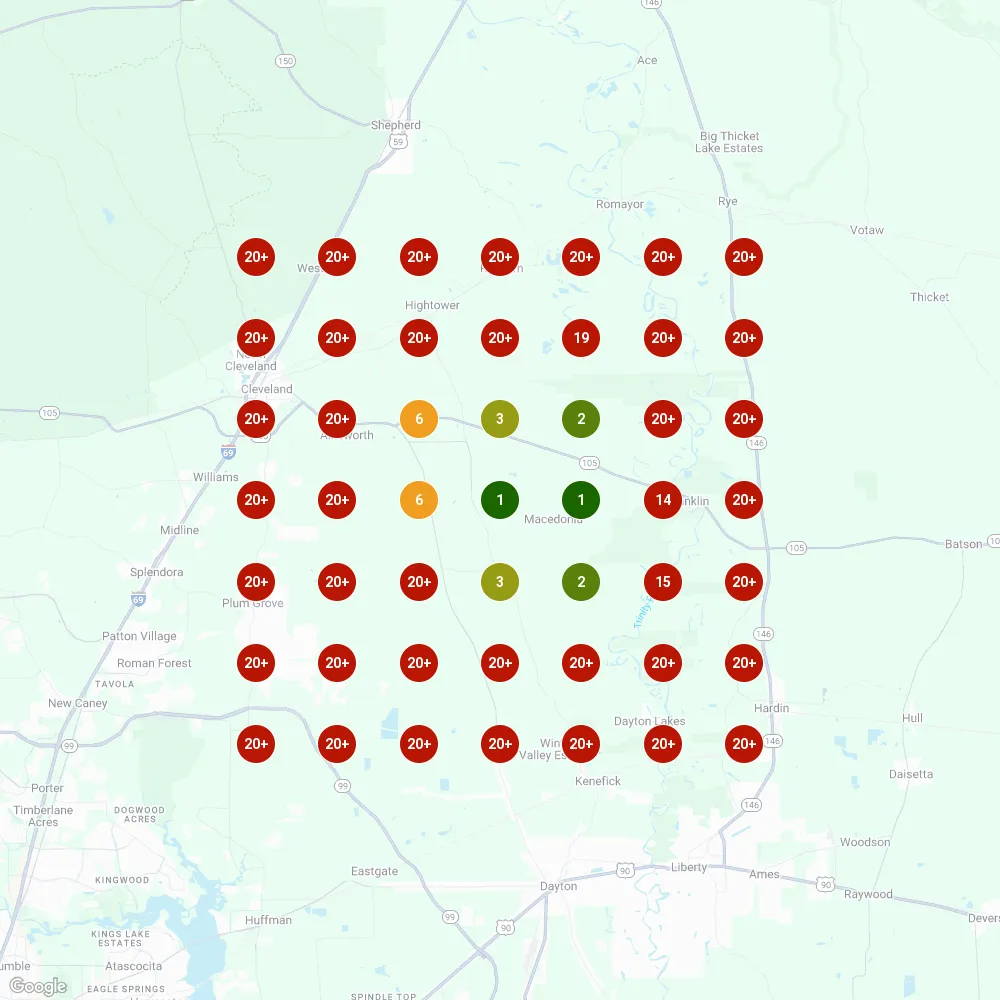
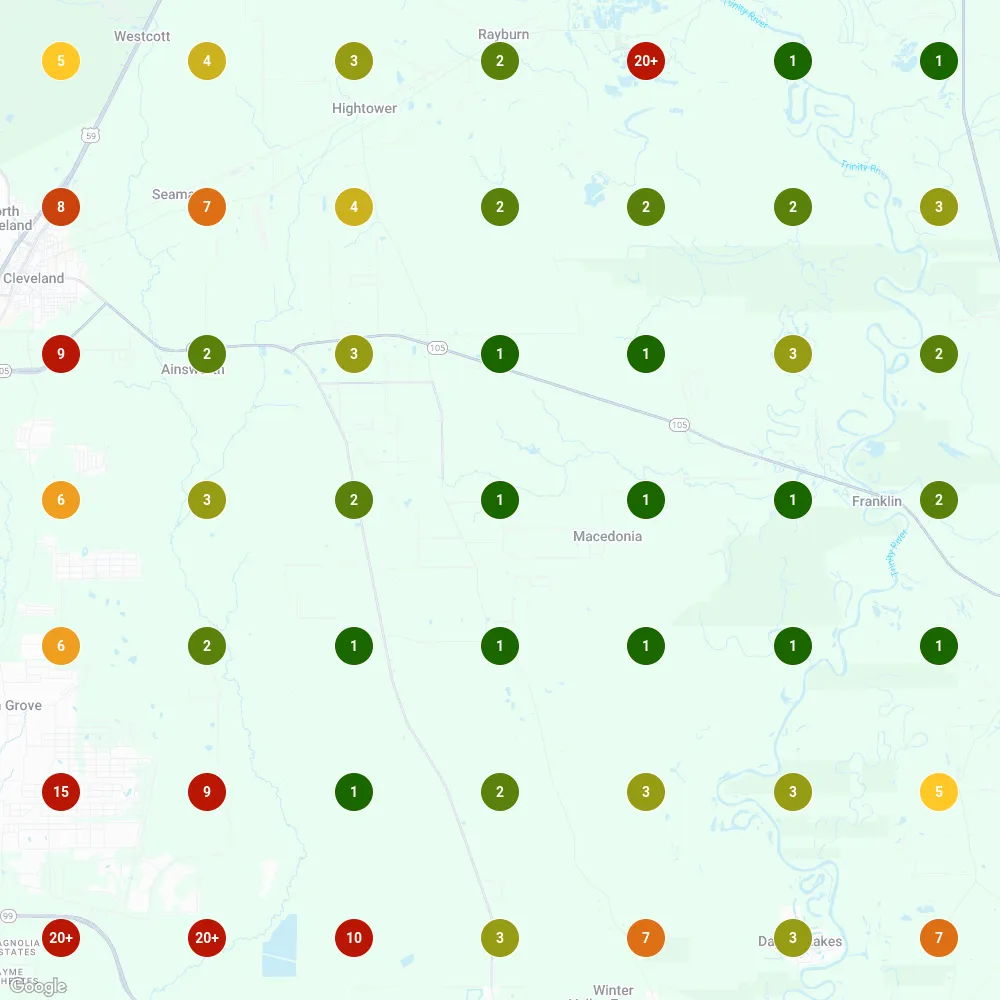
Top 3 at 6 of 49 points before, 32 of 49 after. The before scan covered a slightly bigger area (10 miles vs 9), so the after is a little tighter, but the jump is still the story. They closed two home builds from it, worth roughly $400,000 to $500,000 each.
Make sure you’re the owner of your profile, too. Anyone you hire should be a manager. When I take on a contractor, they add me as a manager and stay the owner. The full walkthrough is in my Google Business Profile optimization guide.
2. Get a Steady Flow of Reviews
Reviews help you rank and they decide who gets the call. In BrightLocal’s 2026 survey of 1,002 U.S. consumers, 97% said they read reviews for local businesses, and 31% said they’ll only use a business with 4.5 stars or better.
The process I give contractors: the tech asks on the spot when the job’s done. If the customer doesn’t leave one, text them the link 24 hours later. Reward your techs for every review so they keep asking. Reward the tech, never the customer. Reviews that were paid for or traded for a discount get removed.
3. Build the Pages Google Needs to Rank You
You can’t rank for a service you don’t have a page for. An electrical contractor I built a new site for had an old site that wasn’t mobile friendly and had no service area pages for the towns he worked in. His leads went up after the rebuild. My rule for any contractor: you will never rank for your keywords if you don’t have the content for Google to rank.
The setup that works:
- A home page built around your main service and area.
- One page per main service. Drain cleaning, water heaters, panel upgrades, roof repair. Whatever you want more of.
- Service area pages for the towns you work in, each with something true about that town.
- Internal links to those pages from your strongest pages, with plain anchor text like “roof repair,” not “click here.”
Don’t copy one page across 30 towns and swap the name. Google calls that doorway abuse, and it’s against its spam policies.
4. Clean Up Your Citations
Citations are your business name, address and phone number listed on other sites: Yelp, Facebook, the BBB, Apple Maps, Bing, trade directories. They need to match everywhere. When I ran local SEO for 18 law firms, a lot of the work was auditing those listings, fixing mismatches and cleaning up duplicates. It’s tedious and it pays off.
5. Earn a Few Local Links
A contractor doesn’t need hundreds of links. You need a few good ones from places that make sense: your equipment manufacturer’s dealer locator, your supply house, local sponsorships, the chamber of commerce.
If you want a bigger link, publish something people want to cite. I once built a dog bite statistics page for a personal injury firm, and it earned links from 127 websites. For a contractor, think local data: storm damage, heat waves, what a job costs in your area.
6. Track Calls, Not Just Rankings
Contractor SEO should be judged by calls and form fills, not rankings alone. Run a grid scan for your top searches once a month, like the ones above. Then look at what matters: calls and form fills, and where they came from. My reports to clients start there, followed by Google Business Profile activity, local rankings and how often the business shows up in AI search answers.
What Ranking Law Firms Taught Me About Ranking Contractors
Most of my 8+ years in SEO was local SEO for personal injury law firms, one of the most competitive local markets there is. I got a firm to #1 for “Orange County personal injury lawyer.”
What did it wasn’t a trick. I tightened up the location pages, added internal links from the site’s strongest pages, published supporting content that linked back to them, and built links through guest posts and local sponsorships. That’s the same playbook I use for contractors. It held up in one of the most competitive legal markets in California, and it’s the same work a contractor needs in a smaller market. The market sets how much of it you need, not whether it works.
SEO by Trade
The same SEO basics apply to every contracting trade. What changes is the category, the services, and the season.
- HVAC: demand swings with the weather. Switch your primary category with the season: “Air conditioning contractor” in summer, “Heating contractor” in winter. Full playbook in local SEO for HVAC contractors.
- Home builders: fewer, bigger jobs, so a few good leads matter. The category fix above is the biggest lever. Searches with a town name in them ranked widest for the home builder I worked with.
- Electricians: a service page for each job type and a service area page for each town you work. The electrical contractor’s old site had neither.
- Plumbers: a lot of plumbing demand is emergency work, so showing up in the map pack and being easy to call matter most.
- Roofers: demand is storm-driven and the competition is heavy. The same order applies. The market asks for more of it.
How Long SEO Takes (and the Cheap SEO Trap)
How long SEO takes depends on the size of your market, how strong the competition is, and where your site starts. My goal is always to find the low hanging fruit that gets leads in fastest. For the HVAC contractor, that meant the map pack within a month, helped by the 320 reviews he already had. For the home builder, a big jump in three weeks. Bigger markets take longer.
Back to the contractor who paid $800 a month for 8 months. When cheap SEO doesn’t work, what’s usually missing is a real strategy and the execution behind it. Talk is cheap. Someone can sound great on a call and have all kinds of ideas, but if they aren’t fixing or building what needs to be built to compete in your market, it doesn’t matter.
SEO campaigns aren’t all the same, and they don’t cost the same. The size of your market and the work it takes to compete should set the budget. If you’re about to hire someone, read my guide on how to choose a marketing agency first.
Do You Even Need SEO?
Not every contractor needs SEO right now. One owner on Reddit said he skips it when he’s busy and only comes back to it when he wants to grow.
I’d hold off on an SEO campaign if you can’t commit to investing for 3 to 6 months. If that’s you, you can still make progress: pay for a one-off Google Business Profile audit and optimization, or learn the basics yourself from YouTube. Fixing your profile and asking for reviews costs nothing but time.
Can ChatGPT and AI Search Find Your Business?
AI search tools like ChatGPT answer “who should I call” questions using what they can find about your business across the web. The longer you wait to show up there, the harder it gets.
There’s no separate trick. Part of it is solid SEO basics, and part of it is building your business’s name and reputation around the web: reviews, listings, mentions. I’ve done this in law, where I grew one client’s share of voice in ChatGPT, Gemini and Perplexity to more than 27% through targeted articles and getting onto “best of” lists. Contractors get there the same way, starting with hyperlocal search basics: your profile, your pages and your reviews.
What to Skip
Some of the most common SEO advice for contractors doesn’t move rankings.
- Posting on your Google profile to rank. Post frequency ranks 148th of 187 in Whitespark’s survey. In my own testing I haven’t seen posts move rankings. They don’t hurt, so automate them if you want. Just don’t pay someone to post for rankings.
- Geotagged photos. Dead last in the same survey, 187th of 187.
- Copy-paste city pages. Doorway abuse in Google’s spam policies.
- Keyword-stuffed business names. Adding services or a city to your profile name can get it suspended.
Frequently Asked Questions
How much should I expect to pay for SEO?
It depends on your market and how much work it takes to compete there. A plumber in a small town and a roofer in a big metro need very different budgets. Whatever you pay, you should get a clear plan, work you can see every month, no long contract, and every account in your name.
Can ChatGPT do SEO?
It can help you write a page or brainstorm keywords. It can’t fix your Google Business Profile, earn your reviews or build the pages your market needs to compete. Showing up in ChatGPT’s answers takes the same basics as showing up on Google, plus your business being mentioned around the web.
How long does SEO take for contractors?
It depends on your market, your competition and where your site starts. One HVAC contractor I worked with was in the map pack within the first month of his rebuild. Bigger, more competitive markets take longer.
Is SEO still worth it in 2026?
For contractors, I think so. The map pack is where homeowners find who to call, and AI search tools pull from the same profile, pages and reviews. The longer you wait, the harder it gets.
Is SEO better than Google Ads for contractors?
They do different jobs. Google Ads can put you in front of searchers this week, but you pay for every click. SEO costs nothing per click, and there’s no way to pay for a better local ranking, so it takes longer to build. One owner on Reddit said his marketing guy talked him out of SEO because he needed leads that month, not in six to eight months. More on the paid side in my Google Ads for contractors guide.
Can I do SEO for my contracting business myself?
Yes, the basics. Fix your Google Business Profile, ask every customer for a review, and build a page for each service and town. If you don’t have time, a one-off profile audit is a good middle step before hiring anyone.