
A home builder north of Houston had one word in the most important field on their Google Business Profile: “Contractor.”
I changed it to “Custom home builder,” finished the rest of the profile, built service area pages and some links. Between two scans three weeks apart, they went from the top 3 at 6 out of 49 search points to 32 out of 49. They closed two home builds from it, worth roughly $400,000 to $500,000 each.
Your Google Business Profile is the free listing that decides who shows up in the map pack. A few settings do most of the ranking work: your primary category, a complete and accurate profile, and reviews. A lot of what gets sold as “GBP optimization” is busywork. Below is which is which, in the order I’d fix it. It’s the first thing I audit when a contractor signs on.
What Google Business Profile Optimization Means for a Contractor
Google Business Profile optimization means setting up your free Google listing so it shows in the map pack for the jobs you want, in the towns you work, and turns those views into calls.
It costs nothing, and you can’t buy your way up. Google says there’s no way to request or pay for a better local ranking. Google ranks local results on relevance, distance and prominence. The local SEO experts Whitespark surveys every year put it more bluntly. Their 2026 report scored 187 factors, and the top five for the map pack were your primary category, how close you are to the searcher, keywords in your business name, a physical address in the city being searched, and being open when someone searches.
Two of those you control in five minutes. Start there.
Get Verified Without Getting Stuck
You get one profile per business. If customers don’t come to your shop, Google says to hide your address and set a service area instead. Never use a virtual office or a mailbox to get a better address. Google says those aren’t eligible for a profile at all.
A lot of contractors now get asked to verify with a video. Google’s rules for service businesses are specific. It has to be one live, unedited take of at least 30 seconds, recorded on your phone through your Business Profile. Plan it before you hit record:
- Where you are: a street sign or landmark at your business address
- That the business exists: your tools, equipment, or branded shirts and gear
- That you run it: you opening up your branded truck, or a business permit, invoice or utility bill with your business name on it
Verification is getting harder. I’m seeing it with the profiles I work on. So get it right once, and think twice before changing things like your business name later. Google says a name change after verification can mean verifying all over again.
Pick the Right Primary Category
Your primary category is the most important setting on your whole profile. It’s #1 in Whitespark’s 2026 expert survey. It’s also the most common mistake I see when I open a contractor’s profile. I’m not the only one seeing it. One local SEO who runs ranking scans for service businesses said on Reddit that profiles set to “Contractor” instead of “Plumber” or “HVAC Contractor” are a common miss.
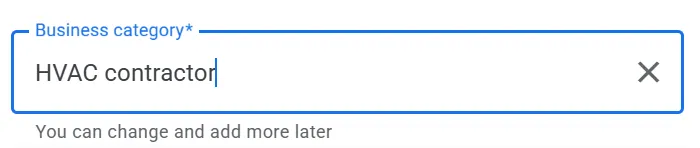
Google’s rule is to use as few categories as you can, as specific as you can. Finish the sentence “this business IS a,” not “this business HAS a.” Whitespark’s advice is to pick the primary category that most closely matches the search you most want to rank for.
A starting point by trade. Google renames categories from time to time, so type yours into the picker and use the closest exact match.
| Trade | Primary category to start with | Secondaries to consider |
|---|---|---|
| HVAC | HVAC contractor | Air conditioning contractor, Heating contractor, Air conditioning repair service |
| Plumbing | Plumber | Drain cleaning service |
| Roofing | Roofing contractor | Only categories for other work you do |
| Electrical | Electrician | Lighting contractor |
| Home building | Custom home builder or Home builder | General contractor |
| Remodeling | Remodeler | Kitchen remodeler, Bathroom remodeler |
HVAC gets a bonus move. Switch your primary with the season: “Air conditioning contractor” in the summer, “Heating contractor” in the winter. It makes sense to capitalize on the season.
You can add up to 9 secondary categories, and they rank #8 on the expert list. They also decide which services you can pick on your profile. Only add work you do. Check every six months or so for new categories that fit you better.
What the Right Category Did for a Home Builder
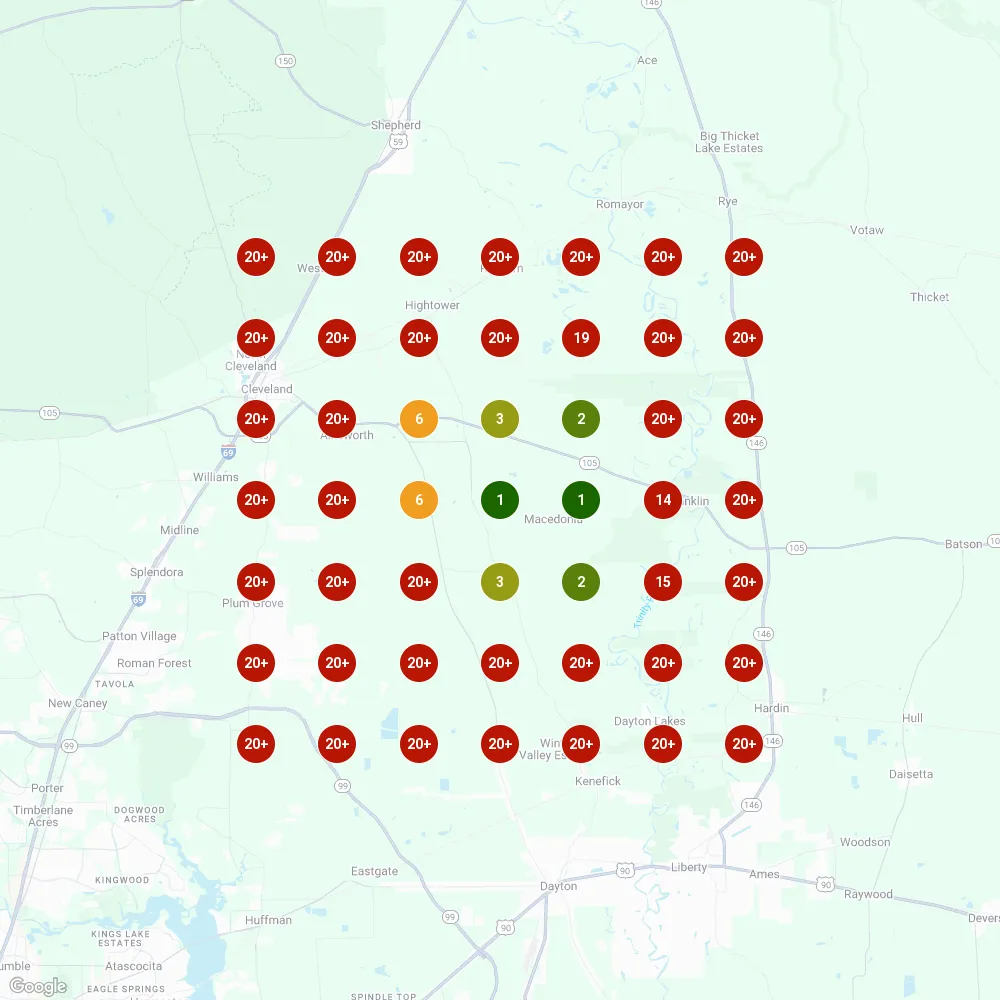
Back to the home builder. Here’s their profile for “custom home builder” before I touched it, on August 21, 2024:
And here it is on September 10, 2024:
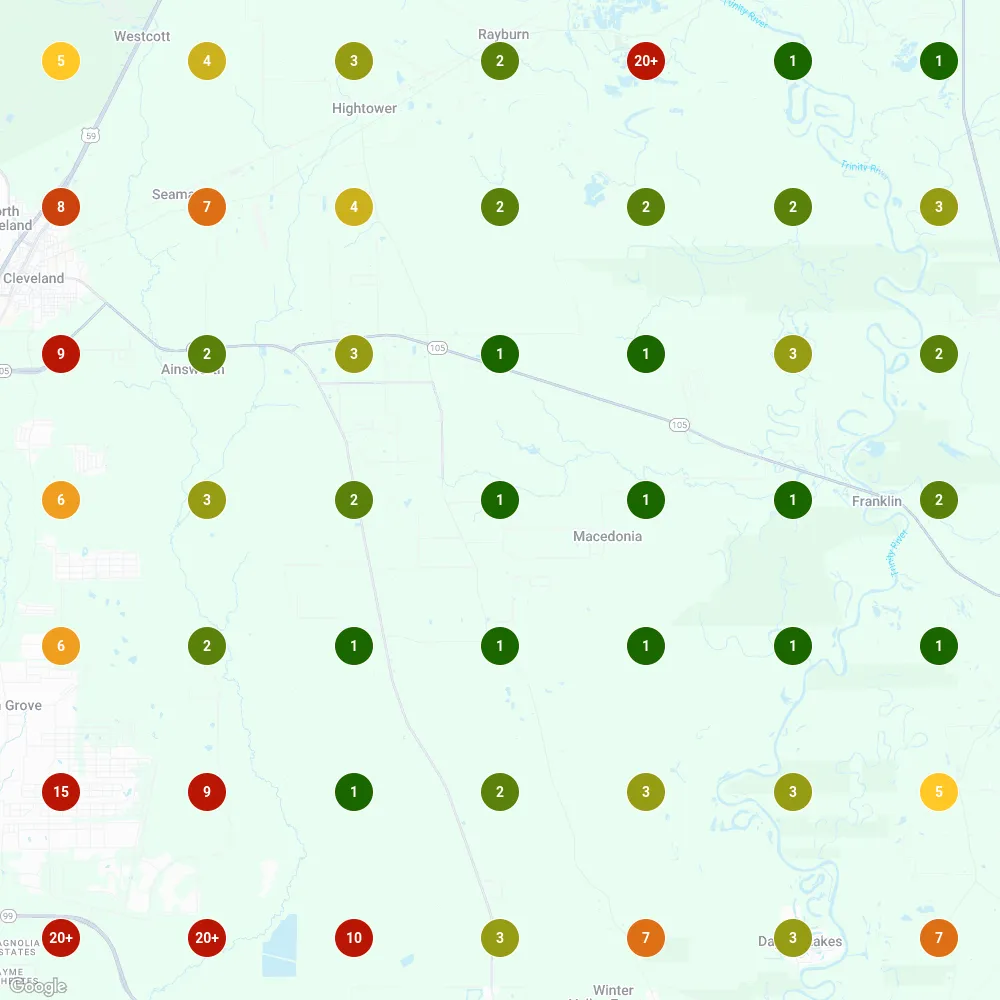
Each dot is a search from that spot, 7 by 7. Before, it was in the top 3 at 6 of 49 points. After, 32 of 49. “Home builder” went from 3 of 49 to 22. To be fair, the before scan covered a 10-mile grid and the after scan a 9-mile one, so the after is a little tighter. The jump is still the story.
The same profile did even better when the search had a town in it. “Custom home builder in Tarkington” was in the top 3 at 47 of 49 points.
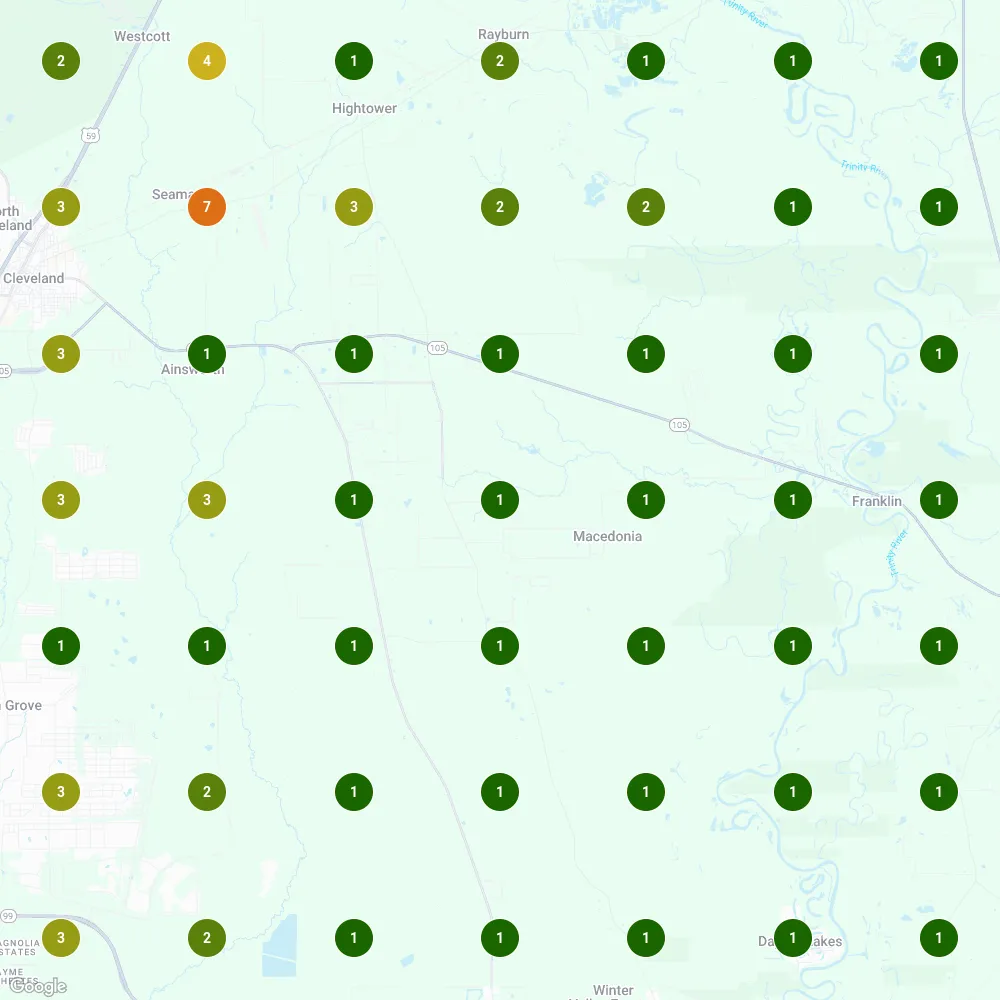
That’s how hyper local search works in practice. You win the searches closest to home first, then push out.
Your Business Name
Google’s rule: your profile name has to be your real-world business name, with nothing added. Stuffing in services or a city can get you suspended.
The data says keywords in the name help. They’re #3 on the expert list, and Whitespark’s 2026 study of more than 1.4 million listings found names with keywords made the top 3 more often in most industries. The legit route is a real name: if you’re rebranding or filing a DBA anyway, put the trade in it.
Is it worth it? It does help. But verification is getting harder, and a name change can put you through it again. It’s a risk versus reward call that comes down to your market and your competition. I go deeper on this in local SEO for HVAC contractors.
Services, Service Areas and Your Description
Services. Google suggests services based on your category, and you can add your own. You can group them, and add descriptions and prices. Use the words customers use: “water heater replacement,” not “plumbing service package.” Write a sentence or two for each. Custom services with prices or phone numbers in the name get rejected automatically.
Service areas. You can list up to 20 cities or ZIP codes. No radius. Google says to keep the whole area within about 2 hours’ drive of your base. Don’t list every town within 50 miles. List the places you want work from.
Description. You get 750 characters. No links, no sales, no prices. Say what you do, where you do it, and who it’s for. A plain description that names your main services and towns beats a paragraph of adjectives.
Hours, Phone and Website
Being open when someone searches is the #5 ranking factor. Keep your hours real. If you’re seasonal, Google lets you use your current season’s hours as your regular hours. Set holiday hours so you don’t look closed on the Fourth of July.
Use a local phone number that you control. Google doesn’t allow numbers or links that redirect people somewhere other than your business.
For the website link, point it at the page that matches the profile, usually your home page or your main service page.
Photos That Do Something
Upload real photos: your trucks, your crew, your shop or office, and your jobs, before and after. I’d aim for a few a month while you’re building the profile. Once it’s established, it’s less of a priority.
Photos are for winning the click and the call, not for rankings. You’ll see “businesses with photos get 42% more direction requests” quoted everywhere as a Google stat. It isn’t on Google’s help page today, so I don’t use it. And geotagging your photos? It ranked dead last in the expert survey, 187th of 187. When a vendor on Reddit recommended it, the first reply was “Geo tag images??? LOL.”
Reviews
Reviews help you rank and they decide who gets the call. Google says more reviews and better ratings can help your local ranking. The expert list has rating at #6 and review count at #9.
BrightLocal’s 2026 survey of 1,002 U.S. consumers found 97% read reviews for local businesses, and 31% will only use a business with 4.5 stars or better, up from 17% the year before.
The process I give contractors:
- The tech asks on the spot when the job’s done and the customer’s happy.
- Text a follow-up 24 hours later if they didn’t leave one, with the direct review link.
- Reward your techs for every review so they keep asking.
Reward the tech, never the customer. Google removes reviews that were paid for or traded for a discount, and bans only asking happy customers or pressuring people into it. Ask everyone, every time.
It also helps to ask customers to mention the job and their town (“new AC install in Cypress”). That’s the kind of detail that helps the next homeowner pick you.
Reply to every review. 89% of consumers expect the owner to respond.
Who Owns Your Profile
You should own your profile. Not your agency, not your web guy.
I started Hyper Local Marketing after watching an HVAC contractor fire an agency that was charging him $5,000 a month, and lose the website he’d paid for. It happens with Google profiles too. One reply in that same Reddit thread told agencies their first step should be to stop owning their clients’ profiles.
Google gives profiles one primary owner, plus other owners and managers. Owners can add and remove people and delete the profile. Managers can do almost all the work but can’t remove you or delete the profile. So keep yourself as the owner and add anyone you hire as a manager. That’s exactly how I set it up: the contractor adds me as a manager and stays the owner.
Check yours today. In your profile, go to Business Profile settings, then People and access. If you don’t see yourself listed as an owner, fix that before anything else.
What to Skip
Posting to rank. Almost every guide tells you to post weekly. Post frequency ranks 148th of 187 in the expert survey. In my own testing I haven’t seen posts move rankings. They help Google crawl your pages and you can automate them, so they don’t hurt. Just don’t pay someone to post for rankings.
Q&A and chat. Both are gone. Google shut off profile chat on July 31, 2024, and started removing Q&A from Maps in December 2025, replacing it with AI answers built from your profile and reviews. Guides still telling you to seed your Q&A are out of date.
Geotagged photos. Dead last.
Keyword-stuffed names and virtual offices. One gets your name changed back or your profile suspended, the other isn’t allowed at all.
How to Tell It’s Working
Run a grid scan for your top 2 or 3 searches once a month, like the ones above. That’s how I measured the home builder. Then watch the calls and website clicks in your profile, and count booked jobs. Rankings are the means. Booked jobs are the point.
If you do one thing this week: open your profile, check your primary category, and check that you’re listed as the owner.
Frequently Asked Questions
Is a Google Business Profile free?
Yes. It’s free to create and manage, and there’s no way to pay Google for a better local ranking.
How much does it cost to optimize a Google Business Profile?
Nothing, if you do it yourself with this guide. If you hire it out, look for work you can see every month, no long contract, and your name on the profile as owner.
How long does it take to see results?
It depends on your market, your competition and where your profile starts. The home builder in this guide went from 6 to 32 of 49 grid points in the top 3 in about three weeks. That’s not a promise. It’s what happened there.
Can I have a Google Business Profile without a storefront?
Yes. Service businesses hide their address and set a service area instead. You’ll still need to verify, often by video showing your tools, branded truck or a permit. A virtual office or mailbox isn’t allowed.
How many categories should I add?
One primary, plus only the secondaries that match work you do. Google says to use as few as possible. You can add up to 9.
Do Google posts help my ranking?
Not much. Post frequency is 148th of 187 factors in the 2026 expert survey, and I haven’t seen posts move rankings in my own testing.