Home Service Marketing Strategies
How to Get More Calls, Better Leads, and Stop Losing Jobs to Competitors
Most home service companies don’t have a marketing problem. They have a system problem.
The phone rings, leads come in, and somewhere between the first call and a booked job, the money disappears.
Research puts the number at 30 to 40 percent of ad spend wasted on leads that never get answered, followed up on, or converted.
This article is not a checklist of generic tips. It’s a ranked, ordered framework for how HVAC companies, plumbers, roofers, electricians, and other home service contractors should actually approach marketing in 2026.
What to build first, what to spend on second, and what to stop wasting time on entirely.
If you run or market a home service business, this is the playbook.
The Market Has Changed. Have You?
Homeowners Don’t Call the Neighbor Anymore
The home services industry was valued at $97.16 billion in 2025 and is projected to hit $194.73 billion by 2035. That sounds like good news.
And it is, for the contractors positioned to capture it. For everyone else, it just means more competition chasing the same customers.
The way customers find contractors has completely flipped. When a pipe bursts at midnight or an AC unit dies in July, the homeowner grabs their phone.
They type ‘plumber near me’ or ask ChatGPT, Google, or Siri for a recommendation. Whoever shows up in those results gets the job. Everyone else doesn’t exist.
Word-of-Mouth Is Still Valuable – Just Not Sufficient
Referrals are still great leads. Don’t stop earning them.
But referral-only businesses have unpredictable pipelines, and you can’t scale on a channel you don’t control.
The contractors growing fastest in 2026 are combining the trust that comes from a strong reputation with the reach that comes from smart digital marketing.
Where Customers Are Actually Finding Contractors in 2026
Google is still the dominant channel. But it’s no longer just ten blue links. Customers are seeing Google’s Map Pack, Local Services Ads, AI Overviews, and traditional organic results all on the same page.
And an increasing number are skipping search entirely, going straight to ChatGPT or Gemini and asking ‘who is the best HVAC contractor in [city]?’
Your marketing strategy needs to account for all of it. That starts with building the right foundation.
Your Foundation – Get This Right Before Spending on Ads
Before you spend a dollar on paid advertising, you need to have your local search foundation locked in.
Most contractors skip this step, run ads, and wonder why they’re paying $25 a click to lose to a competitor with a better Google Business Profile.
Google Business Profile: Your Most Important Marketing Asset
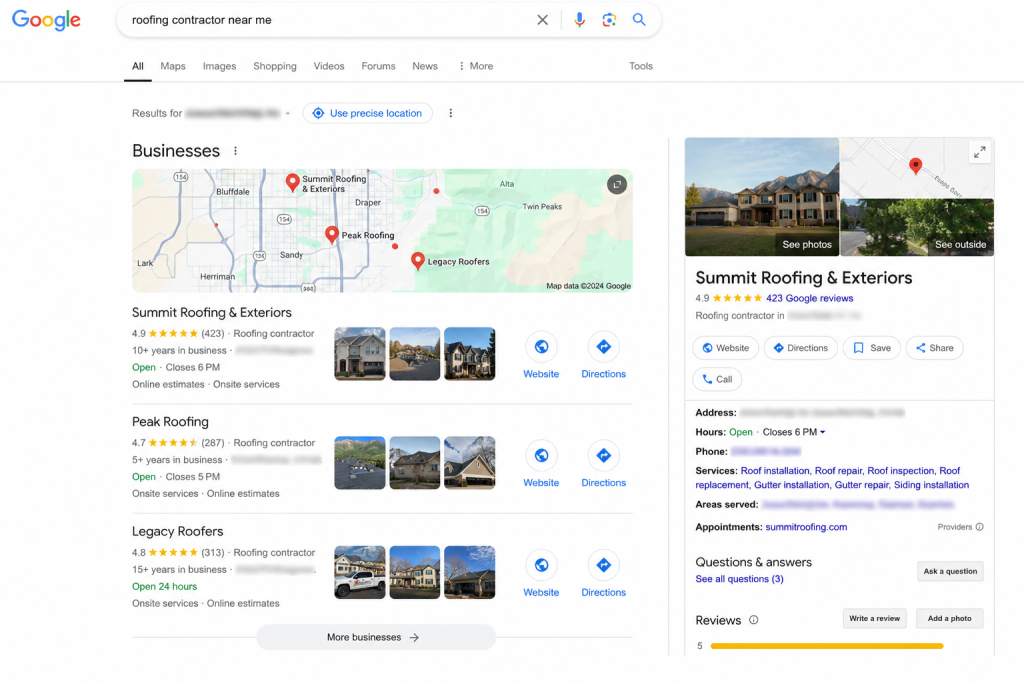
Your Google Business Profile (GBP) determines whether you show up in the Map Pack. A strong GBP presence drives more leads than most paid campaigns, at zero ongoing cost per click.
Google now weights recent reviews more heavily than ever. Companies generating 3 to 5 reviews every month consistently outrank competitors who have more total reviews but stopped collecting them six months ago. That alone should tell you how much Google values an active, maintained profile.
The Fields Most Contractors Leave Blank (And Why They Matter)
Most GBPs are maybe 60 percent complete. Contractors fill in the name, phone number, and call it done.
Here’s what actually matters:
• Primary category: Choose the most specific one available – ‘Plumber,’ ‘HVAC Contractor,’ ‘Roofing Contractor.’ Not ‘Contractor’ as a catch-all.
• Secondary categories: Add relevant ones like ‘Air Conditioning Repair’ or ‘Emergency Electrician.’ These expand the searches your profile can match.
• Services: List every individual service with a description. Google uses this to match your profile to specific searches.
• Business description: Use all 750 characters. Include your service area, what you specialize in, and why customers trust you.
• Photos: Upload real photos of your work, your trucks, your team, and completed jobs. Profiles with photos get significantly more calls than those without.
• Google Posts: Treat these like a social feed attached to your profile. Post 2 to 3 times a week during the busy season. Promotions, recent jobs, seasonal reminders.
• Q&A and Messaging: Turn on messaging. Answer the Q&A section. These are signals that your business is active and responsive.
Location Pages: One Page Per City Is Not Enough
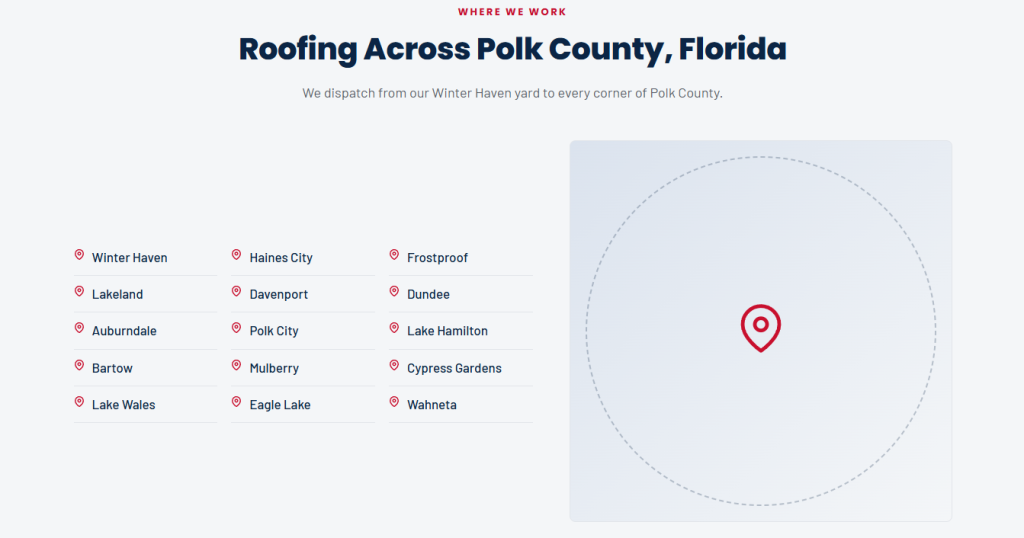
If you serve five towns, you need five location pages on your website, minimum. Each one should mention specific neighborhoods, landmarks, and ZIP codes within that area.
Generic pages like ‘We serve the greater Dallas area’ don’t rank. Pages built around specific communities do.
NAP Consistency: What It Is and Why Google Cares
NAP stands for Name, Address, Phone number. Every time your business appears in an online directory, Google checks whether the information matches.
Inconsistencies hurt your local rankings. Audit your citations, clean up the ones that are wrong, and keep them consistent across every platform.
Key takeaway: You can run $5,000 a month in ads and still lose the Map Pack to a competitor with a better GBP. Fix the foundation before you pay for traffic.
Reviews Are Not Happening on Their Own – Build a System
Reviews are not nice-to-have. They are a ranking factor and a conversion factor at the same time.
BrightLocal’s 2025 Local Consumer Review Survey found that 71 percent of consumers always or regularly read reviews when looking for a local business. That number has gone up every year. Reviews you get naturally are not a strategy – they’re luck.
Why Volume and Recency Both Matter
A competitor with 200 reviews collected over four years is not necessarily beating you. If you’re generating 5 fresh reviews every month and they haven’t gotten a new one since last spring, you have the edge. Google weights recency heavily.
An active review profile signals an active business.
When and How to Ask (Timing Is Everything)
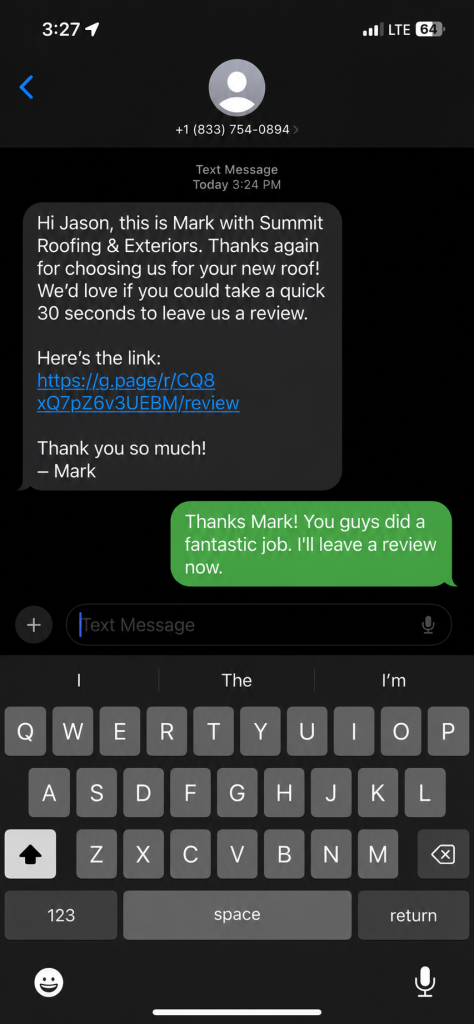
The best time to ask for a review is at the moment the customer expresses satisfaction, right when the tech wraps up and the homeowner says ‘great job.’ That’s the window.
A text message with a direct review link sent within an hour of job completion will outperform a follow-up email three days later every single time.
Make it frictionless. The link should take them directly to the review box, not to your profile page where they have to figure out how to leave one.
How to Handle Negative Reviews Without Making It Worse
Respond to every negative review publicly, quickly, and professionally. Don’t argue.
Acknowledge the experience, apologize for the outcome, and offer to make it right offline. Other potential customers are reading your response more than the review itself.
How you handle a complaint is a better trust signal than a perfect rating.
Paid Traffic – What’s Worth It and What’s a Money Pit
Google Local Services Ads: Start Here
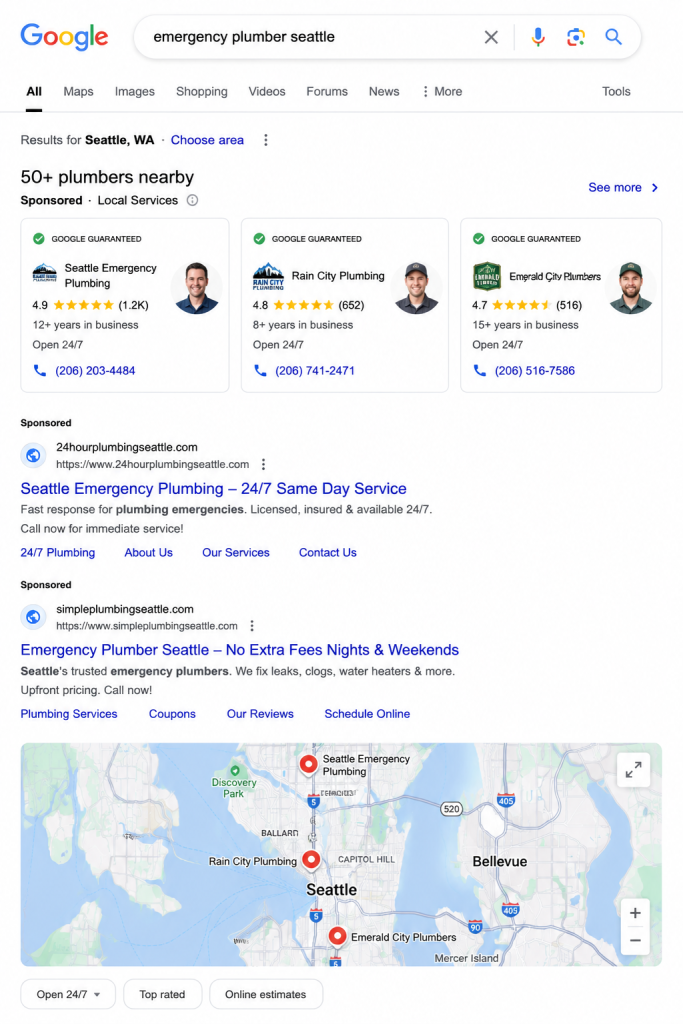
If you’re going to spend money on paid advertising, start with Local Services Ads (LSAs).
They appear at the very top of the search results page, above PPC ads, above the Map Pack, above everything.
They’re pay-per-lead, not pay-per-click, so you only pay when someone actually contacts you. And they carry the Google Guaranteed badge, which signals trust to homeowners who have no other way to vet you.
For emergency services especially: burst pipes, HVAC failures, electrical issues – LSAs are the highest-ROI paid channel available.
Google PPC: It Works, But Only If Your Conversion Does Too
Google Ads search campaigns can generate strong results for home service companies, but the cost has gotten serious.
Keywords that cost $5 a click a few years ago can now run $25 or more in competitive markets. That means your landing pages, your offer, and your response speed all have to be dialed in before you’re spending $5,000 a month on traffic.
One critical rule: every ad should point to a specific landing page that matches what the person searched.
Someone clicking an ad for ‘AC repair’ should land on an AC repair page, not your homepage. This is one of the most common mistakes contractors make with PPC, and it kills conversion rates.
Lead Aggregators (Angi, Thumbtack, HomeAdvisor): The Honest Take
These platforms sell the same lead to 3 to 5 contractors simultaneously. Whoever responds first usually wins.
If you’re paying $40 to $150 per lead and your average response time is 3 hours, you’re not really competing – you’re just funding the contractors who answer faster than you.
That doesn’t mean skip them entirely. Use aggregators to fill gaps in your schedule or test new service areas. Don’t use them as your primary lead source.
Build channels you own: your GBP, your website, your review profile; so you’re not dependent on platforms that can raise their rates any time they want.
How to Think About Your Marketing Budget
Established home service companies should allocate 5 to 10 percent of revenue to marketing. Companies in active growth mode should plan for 10 to 20 percent.
But those numbers only make sense if your conversion rate is healthy. If you’re booking fewer than 50 percent of your inbound leads, you don’t have a marketing problem, you have a conversion problem. Spending more on lead generation won’t fix it.
The math that matters: If you’re spending $200 per lead and booking 40% of them, your cost per booked job is $500. Fix your conversion rate to 75% and that drops to $267 – same ad spend, dramatically different result.
Hyper Local Search – The Strategy Most Contractors Skip
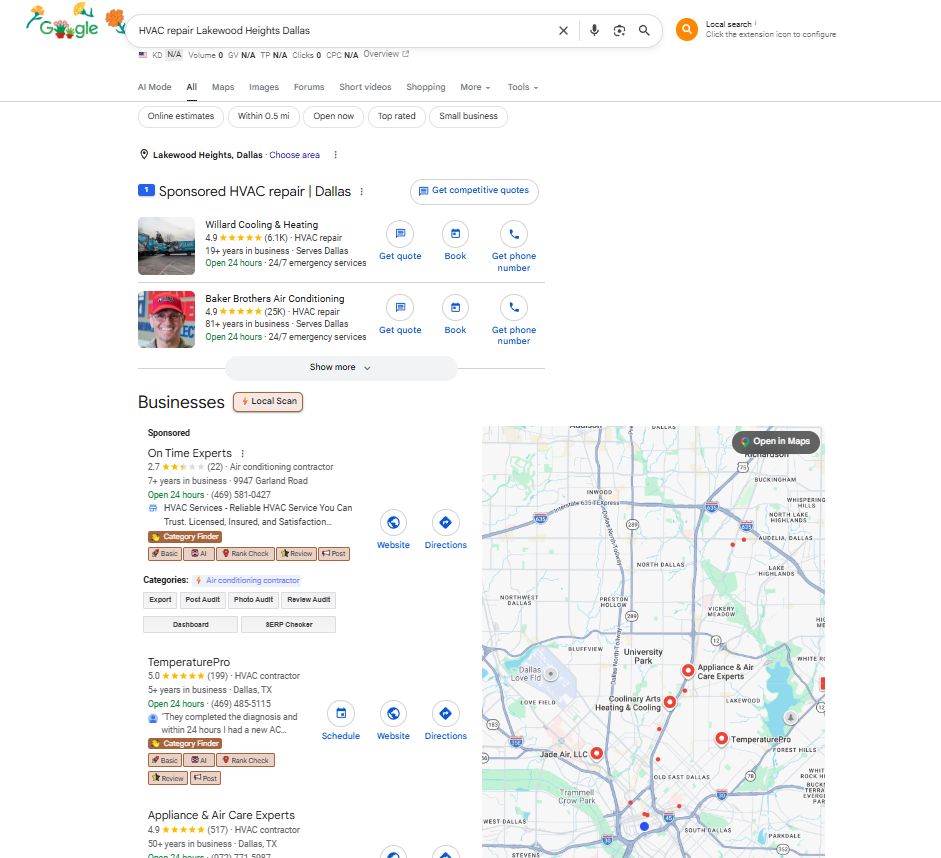
Most marketing advice tells contractors to ‘rank for local keywords.’ What they usually mean is rank for [city] + [service]. That’s table stakes.
The contractors who actually dominate local markets go deeper – they own visibility at the neighborhood and ZIP code level.
City-Level SEO vs. Neighborhood-Level Dominance
Ranking for ‘HVAC contractor Dallas’ is harder and less targeted than ranking for ‘HVAC repair Oak Cliff Dallas’ or ‘air conditioning company Lakewood Heights.’
The homeowner who types the neighborhood-level search is closer to a booking decision and less likely to be comparison shopping. You also face far less competition at that level.
This is what hyper local search means in practice. You’re not trying to be the most visible HVAC company in a metro. You’re trying to be the obvious choice in the specific communities where your trucks are already running.
How to Build Service Area Pages That Actually Rank
Each service area page needs to go beyond inserting the city name into a template. Include specific neighborhoods served, local landmarks, ZIP codes, and language that signals geographic relevance.
Mention local context where it makes sense – if you’re an HVAC company in Florida, your page for a specific city should acknowledge the climate and the seasonal demand patterns that actually apply there.
These pages should live on your main website domain and link to each other. Thin, templated pages with nothing but swapped city names don’t rank and they don’t convert.
Facebook Neighborhood Groups: Show Up Where the Referrals Happen
Local Facebook groups – [City] Homeowners, [Neighborhood] Community, [Town] Buy Nothing – are where homeowners ask for contractor recommendations every single day.
You don’t advertise in these groups. You show up, provide genuine value, answer questions, and be the person people recognize when someone asks ‘does anyone know a good electrician?’
That’s not a paid strategy. It’s a visibility strategy that compounds over time and costs nothing but consistency.
Why Franchise Competitors Can’t Win at This Game
National franchise operators can outspend you on Google Ads.
They can’t out-community you. They can’t build genuine neighborhood-level trust in 50 markets at once.
A local contractor who is actually present in the community – sponsoring youth sports teams, showing up in neighborhood forums, earning recommendations from real neighbors — has a moat that money alone can’t buy.
Speed to Lead – The Gap Between Marketing and Revenue
This section doesn’t get talked about enough in marketing content because it sits at the intersection of marketing and operations.
But it is directly responsible for a massive percentage of lost revenue at home service companies.
The Contractor Who Answers First Gets the Job
When a homeowner has a problem, they reach out to multiple contractors at once. It’s not disloyal – it’s practical.
They need help and they want a response. The contractor who replies first, by phone, text, or email, usually gets the job. Not always. But most of the time.
This isn’t a theory. It’s how homeowners behave, and it’s how your competitors are beating you on leads you already paid for.
What Unanswered Calls Is Actually Costing You
It shouldn’t be a surprise that a lot of contractor calls go completely unanswered. 85% of those callers immediately move on to a competitor.
You’re not losing those leads to better marketing – you’re losing them to faster answer times.
If you’re running ads and your calls are going to voicemail, you’re paying to generate leads for the contractor down the street who picks up the phone. That’s the reality.
Your Options: Staff, Answering Services, and Automation
You have three real options for fixing your speed-to-lead problem:
• Dedicated office staff: A CSR whose job is to answer calls, book jobs, and follow up on leads. Best option if you have the volume to justify it.
• Answering service: Companies like Ruby handle calls after hours or during peak times. The caller gets a real person. You get a lead notification.
• SMS automation: If a call goes unanswered, an automated text fires within 60 seconds. ‘Sorry we missed you, we’re on a job. Reply here or we’ll call you back within the hour.’ It’s not perfect but it keeps the lead warm and signals that you’re responsive.
Why You Need a CRM and What to Look For
A spreadsheet is not a CRM. Without a real system to track every lead from first contact to booked job, things fall through the cracks.
In a business where every job is worth hundreds or thousands of dollars, a few missed follow-ups a month adds up fast.
For home service companies, look at ServiceTitan, Jobber, or Housecall Pro. These are built for the trades.
They handle scheduling, lead tracking, invoicing, and follow-up automation in one place.
Top-performing home service companies with tight front office systems convert over 80 percent of their qualified leads. The industry average is far below that.
Content and Social Media – What’s Worth Your Time
Most contractors either post nothing on social media or post generic content that does nothing for them – stock photos, inspirational quotes, promotional flyers nobody asked for.
The contractors generating real business from content do one thing consistently: they show their work.
Video Wins for Home Services (And It Doesn’t Need to Be Polished)
63 percent of social media users prefer authentic, relatable videos over high-production content. For home service contractors, this is genuinely good news.
You don’t need a professional video crew. You need a phone mount in your truck and the habit of recording before and after every significant job.
Walk through what you found, what you fixed, and why it matters to the homeowner.
Talk like a professional explaining something to a neighbor, not like a salesperson reading a script. That’s the content that gets watched and shared.
Before and After Content: The Format That Converts
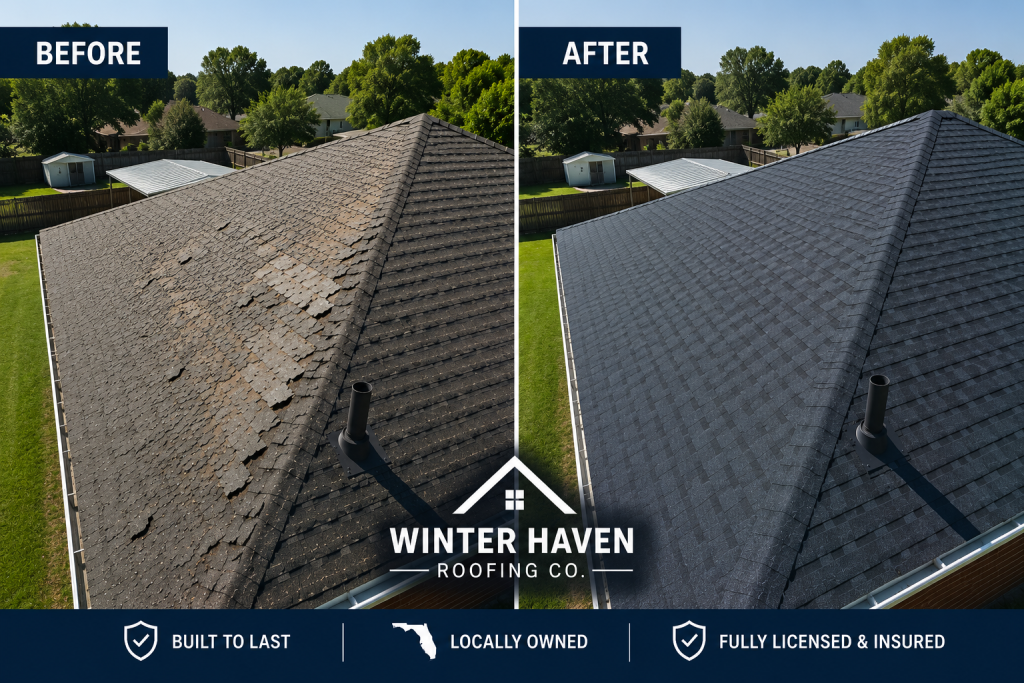
Before-and-after photos and videos are the highest-converting content format in home services.
No explanation needed – the transformation speaks for itself. Post these consistently.
Every major job is a content opportunity. A roof replacement, a panel upgrade, a water heater install – all of it is content that builds trust with every homeowner who sees it and wonders ‘could they do that for me?’
Platform Priority: Where to Focus First
• Google (GBP posts and photos): Always first. This directly impacts your local rankings and visibility where customers are actively searching.
• YouTube Shorts or TikTok: Short-form video of actual jobs. High reach, low production bar, and before-and-after content performs especially well here.
• Instagram: Strong for visual trades — roofing, landscaping, remodeling. Build a portfolio of your best work.
• Facebook: Primarily for neighborhood groups and local community engagement, not broadcast content.
Email to Past Customers: The Easiest Revenue You’re Leaving on the Table
Your past customers already trust you. They’ve let you into their home. A simple email list with seasonal touchpoints: pre-summer AC tune-up reminders, pre-winter heating checks, annual service deals; is one of the highest-ROI channels you have.
Most contractors don’t use it at all.
You don’t need a sophisticated email platform. A basic list and two or three sends per year will generate real repeat business and referrals from customers who would have otherwise forgotten you existed.
What to Stop Wasting Time On
Stop posting stock images. Stop sharing inspirational quotes. Stop cross-posting the same content to every platform simultaneously. Stop spending hours on platforms where your customers aren’t. An hour per week of real job photos and honest content will outperform a full-time social media manager posting generic material.
AI Search — The New Frontier for Local Contractors
This is the one area that almost no competitor content covers, which means it’s an opportunity for contractors who pay attention now rather than waiting until everyone is talking about it.
How Homeowners Are Using AI Search to Find Contractors
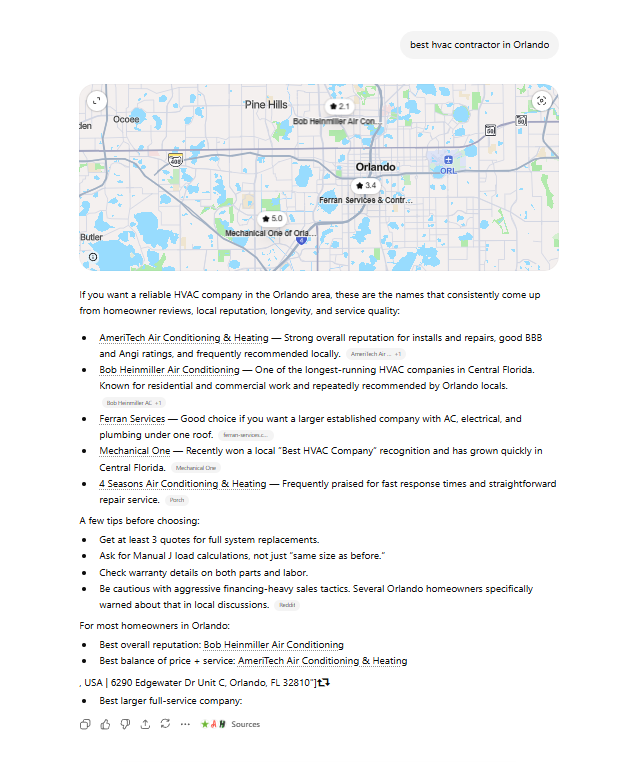
A growing number of homeowners are skipping Google entirely and going straight to ChatGPT, Gemini, or Perplexity with questions like ‘what’s the best HVAC company in [city]’ or ‘who do people recommend for roof replacement near [ZIP code].’
These tools give direct answers. They don’t show ten blue links. They recommend one or two businesses and explain why.
If your business isn’t being surfaced in those answers, you don’t exist for that customer. They never even get to the step of finding you on Google.
What AI Pulls From When Recommending Local Businesses
AI search tools pull from a combination of sources: your Google Business Profile, your website content, your reviews, local directory listings, and third-party mentions: news articles, local blogs, industry sites, and forum discussions that reference your business.
Critically, research shows that 85 percent of brand mentions in AI answers come from third-party pages, not your own website.
Your website is necessary but not sufficient for AI visibility. What other authoritative sources say about you matters more than what you say about yourself.
Why Third-Party Mentions Matter as Much as Your Own Website
This is why local press coverage, industry directory listings, and community sponsorships matter beyond just brand awareness.
Every time a credible external source mentions your business, it’s a signal that AI tools use when deciding who to recommend.
Getting mentioned in a local news story about a contractor doing good work in the community is worth more than five blog posts on your own site.
What to Do Right Now to Show Up in AI Results
• Make sure your website clearly answers the questions homeowners actually ask: what you do, what areas you serve, what your work costs, and why customers trust you.
• Maintain an active GBP. AI tools reference it directly.
• Generate consistent reviews. AI tools surface businesses with strong, recent review profiles.
• Build local citations in directories that AI tools index: Yelp, BBB, Angi, local chamber of commerce sites.
• Pursue local press mentions and community involvement that generates coverage from third-party sources.
This isn’t a separate strategy. It’s an extension of doing local SEO correctly.
The businesses that have invested in their local presence for years will naturally perform well in AI search.
The ones starting from zero will have a steeper climb.
Track It or You’re Flying Blind
You cannot improve what you don’t measure. Most home service companies run marketing across multiple channels, have no idea which ones are actually generating booked jobs, and make budget decisions based on gut feel. That’s how you waste money for years without knowing it.
The Three Numbers That Actually Matter
Stop tracking vanity metrics: website visits, impressions, follower counts.
Track these three instead:
• Cost per booked job: Total marketing spend divided by number of jobs booked from that spend. This is your real cost, not cost per lead.
• Lead-to-booked-job conversion rate: If you’re generating 50 leads a month and booking 20 jobs, that’s a 40 percent conversion rate. Anything below 60 percent points to a response speed or follow-up problem.
• Revenue by channel: Which marketing sources are actually generating revenue, not just calls? This is what tells you where to put more budget and where to cut.
Call Tracking: Know Which Channel Sent the Call
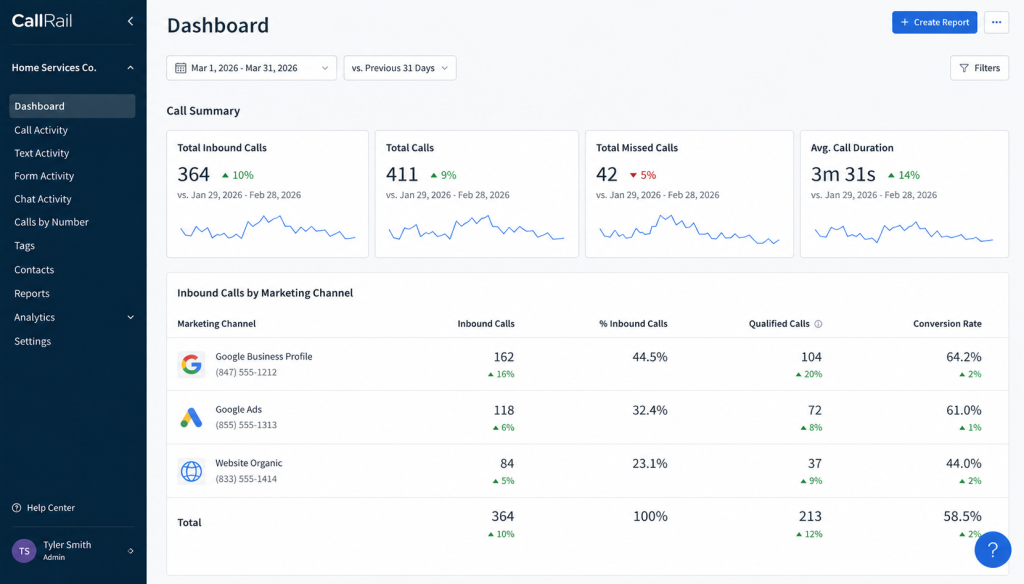
Call tracking software – CallRail is the standard for this industry, assigns a unique phone number to each marketing channel.
Your GBP gets one number. Your Google Ads get another. Your website gets a third. When a call comes in, you know exactly where it originated.
Without this, you’re attributing every call to whatever channel you feel like, which is not attribution.
Cost Per Booked Job: The Metric Your Agency Might Not Want You Watching
If your marketing agency reports success in terms of traffic, impressions, and click-through rates, ask them one question: what is my cost per booked job by channel?
If they can’t answer it, they’re optimizing for metrics that don’t correlate to your revenue.
A good marketing partner wants you watching this number because they’re confident it will justify what you’re paying them.
The Mistakes Killing Your Marketing (Quick Reference)
These are the patterns that show up over and over in home service companies that are spending money on marketing without seeing results from it.
Mistake #1
Competing on Price Instead of Trust
When your marketing leads with ‘affordable’ or ‘best prices,’ you attract customers who will leave you for anyone who bids $50 less. Position on expertise, reliability, and results. Let your reviews and your work justify your rates.
Mistake #2
Starting to Market Only When You’re Slow
Marketing takes time to compound. If you start when your calendar empties out, you’re already three months behind. The companies that market consistently, even when they’re fully booked are the ones that never have slow seasons.
Mistake #3
Treating Marketing Like a Vending Machine
Put money in, expect leads out with no attention to strategy, tracking, or conversion. Marketing is a system that needs to be built, measured, and iterated on. One-time campaigns don’t compound. Systems do.
Mistake #4
No Review System
Waiting for reviews to happen naturally means your competitor with a system is outpacing you every single month. Set up the process: who asks, when, and how – and treat it like a core business operation.
Mistake #5
Using Lead Aggregators as a Primary Channel Without the Speed to Win
If you can’t respond to a lead within 5 minutes, pay-per-lead platforms are feeding your competitors. Fix your response speed before you spend another dollar on shared leads.
Mistake #6
Ignoring Past Customers
The easiest sale you will ever make is to someone who already hired you and was happy. An email list and two seasonal touchpoints per year is a real retention channel. Most contractors never send a single follow-up message after the job is done.
Mistake #7
Spreading Across Every Platform Instead of Owning Two or Three
Posting inconsistently across six platforms produces worse results than posting consistently on two. Pick the channels where your customers are and show up there every week.
Systems Beat Budgets
The home service contractors winning their local markets right now are not necessarily the ones with the biggest ad budgets. They’re the ones with the best systems: a complete GBP, a review process that runs automatically, a response time measured in minutes instead of hours, and a tracking setup that tells them exactly where their revenue is coming from.
The Stack: How to Layer These Strategies in Order
1. Foundation first: GBP optimization, NAP consistency, location pages
2. Review system: Set it up before you do anything else in paid
3. Paid traffic: LSAs first, then Google PPC once you have conversion data
4. Hyper local search: Nextdoor, neighborhood groups, service area pages at the ZIP level
5. Conversion infrastructure: Speed-to-lead, CRM, follow-up sequences
6. Content and social: Before-and-after video, GBP posts, email to past customers
7. AI search readiness: Third-party mentions, structured content, local authority signals
What to Do This Week
Don’t try to do all of this at once. Pick one thing that’s clearly broken and fix it.
If your GBP is incomplete, fix that. If you have no review system, build one. If you’re running ads with no call tracking, set that up before you spend another dollar.
Marketing is not a one-time project.
It’s a set of systems you build, measure, and improve over time. The contractors who start building now will be the ones dominating their local markets in 12 months.
Want This Done For You?
Hyper Local Marketing runs local SEO, Google Ads, and Local Services Ads exclusively for home service contractors. No long-term contracts, no cookie-cutter campaigns. If you’re ready to build a system that actually generates booked jobs, let’s talk.